
Be yourself; Everyone else is already taken.
— Oscar Wilde.
This is the first post on my new blog. I’m just getting this new blog going, so stay tuned for more. Subscribe below to get notified when I post new updates.
Be yourself; Everyone else is already taken.
— Oscar Wilde.
This is the first post on my new blog. I’m just getting this new blog going, so stay tuned for more. Subscribe below to get notified when I post new updates.

بسم الله الرحمن الرحيم
الحمد لله رب العالمين
والصلاة والسلام على رسول الله
A Cognitive frame or a paradigm is the way you view the world and how it enters back to your lens. The same people can look at the same thing but the way they internalize it very differently.
Da’wah in its essence in the Arabic language means; To Invite, To Call, To Summon
They are different kind of invitation in the Arabic semantics/language construction. You can call somebody to task. That is more of a command. Or you can invite them to like how a child is asking his father for something like asking for permission, pleading etc.
Da’wah as a concept is very different, as least from the experience of having the opportunity to seeing masters of this tradition, passing down the Sanad (chain of knowledge) from mother to daughters or father to son, and then coming back to the western paradigm was kind of shocking.
In a sense that the word Da’wah, has been completely misunderstood. And I think one of the reason for why people in western society will tend to take on a different understanding is from those different type of worldviews that they come in, we revamp and synthesis that word (based on the worldviews) to some (version) Islamic terms. Thus changing the semantic fields and projecting the word now thinking this is what the word originally means in the Islamic tradition.
So to illustrate the true meaning. Da’wah in many ways it is a mode of being, rather than something that you do.
In its reality it is which every Muslim aspire to be, not aspire to do.
Now when you do a quick search on the internet one of the first few searches that comes out is “How to do Da’wah.” Which becomes sort of formulaic and very functional.
Da’wah as a relating or conveying of a truth, is not trying to convince the people.
So now the first paradigm shift is to be; in calling people to Islam and not about convincing people about Islam. (eg. to try explain Allah exists)
One of the principle of Da’wah is understanding that ultimately its not something that we have control over.
The Da’i (the one calling) is more like a vessel. So this Da’wah or this Prophetic Call is deeply related to your own personal spiritual well-being. That concept that if a person is rooted deeply to that which is Real by implication they will call to something that is Real.
One of the definition of Da’wah is; Connecting the Creation Back to the Creator.
Ultimately it’s the Creator that can initiate that Pull. Allah informs us in the Quran that the Prophet Saw as (being) the Caller to Allah by His Leave/Izin (Divine licence). And that the Prophet saw is described as this Mystical Radiant Light which Illuminates. (Sirojammuniirah)
So Da’wah is not about handing out a leaflet or even saying something. In its essence, its about having a Prophetic State of Being.
The way of that Being; is to be concern, to be connected and rooted. And to continue and deepening this process into calling people back to what is Real. (Bringing people back to Presence, relocate people back from this disharmony, dysfunctional integration of the mind, body, soul and spirit.) In their practice, in their dealings and in their worldview, back to Allah. Based on Knowledge/Insights. (Ala Basirah)
Now by implication we have to have an understanding of this Knowledge what kind of Prophetic Knowledge is being said here. Thus, as much as our following in this mode of being, in the Prophetic Way, in adopting the Prophetic world view, so to is our success in making Da’wah.
Now there are 3 components to Da’wah. 1) The Caller (Da’i). 2) The Called (Mad’u‘). 3) The Means (Wasilah).
Its amazing because as something that is incredibly mystical – its still so – it’s like a science, an art, that is codified and understood. But again, not to suffocate out the mystical part that is not meant to be grasp yet.
Eg. The prayer. There’s the Fiqh, how to bow and stand all these external actions, but is that the prayer? Is that the reality of the gift that was given directly, personally to the Prophet saw.
The closest translation to it (the prayer) is called the 5 daily connections. Like instead of saying I want to do Wudu’ for my prayer. I should say “I want to illuminate myself for my connection. “ (so in essence on one level, the Prayer is our personal relationship/connection/communion with the Creator)
The word Wudu’ is from Wada’a; Illumination. – “I’m going to illuminate myself by spiritual cleansing through water to enter into my connection and communion with Allah”.- See the paradigm shift, now how would a person with that paradigm shift going to enter into the prayer. (that’s the real reality of Wudu’ & Prayers at one level)
So that being said there are 3 core principle and this is in order to grasp some profound realities, which might be quite abstract.
1) Da’i – The One who’s calling. Is it me & you? This is another paradigm shift. In its absolute reality, it’s Allah who is calling. And that the greatest one who is invested and given this spiritual capacity to call back to Allah in everything that he did was the, Prophet Saw. And then in accordance to (his saying) ” I and who that follows me.. ” so in accordance to how we follow and emulate him in our character and mode of being, and ultimately in our Hamm (aspirations). So to is the success of being a vessel of the Light flow to people.
(Hamm is to be able to have this yearning of care, to really care for people. if you really don’t care for people it doesn’t matter what and how much you do. The core reality of calling to people is this Hamm, because that is the real sign of sincerity. The prophetic care. The Prophet Saw used to be up all night praying for people. If we can’t love and care for people, it will be ineffective. Allah is not going to call people through us.)
One of the most important thing to understand about Da’wah is that at best, it is an honour, and that we are merely a channel, a vessel, and we need to get ourselves out of the way (basically to remove our ego and Nafs as much as possible), in order for that Light to flow through. This is also an integral part of Da’wah. To know ourselves, to recognise the Ego. (eg. when is it me calling to Allah?)
Often when you hear about apostates or those disengage with the religion, its not about the principle or what it calls to. More often than not it’s because these people had a bad experience with the pseudo-representatives, even worse, as a capacity of a teacher. That is why ultimately it doesn’t call to Allah, because that is not following the way of the way of the Prophet Saw. The gentlest of human being.
The more we understand about the Prophet Saw, that he came with Akhlak and he didn’t call to a particular, group, an order, a teacher or a sheikh, he calls to Allah. Because Islam is vast, not everything is everyone’s cup of tea.
Understand that as human beings we have our own taste. Know that Islam is vast and encompassing. We must not be a blockage to someones path to God just because they are not following your channel, the way you understand Islam you are just calling to the way you found it, and that may not be that person’s cup of tea.
So you must have that prophetic expansiveness and magnanimity to know that you’re ultimately a vessel and in service to God to facilitate that journey for people in this Earth.
2) Then you have the Mad’u’ – the one is who being called. One of the first principle, and you need to understand this dynamic, and is that the Da’I – the one who is calling – has to believe that the person they are speaking to is better than them. If you don’t believe that, then give up. You are not going to have any effect. That is the exact reason why people feel preached to. Because it is coming from the place of high and mighty.
“ The real Servant of God (Rahman) are the ones that walk the earth delicately..” (with humility before God.)
3)Then you have the Wasilah – the means – the connecting factor. That might be talking about the latest football match, a smile, a gift, holding the door open for someone, an act of kindness or even a restraint (of speech etc).
This is where people typically focus on the ‘Da’wah of 3 and a half minutes’. First and foremost you’re not doing the Da’wah and it is not something that you can maintain. Its not like well, I’ve given the gift, I’ve did the solid presentation or experiment about bringing to God but why hasn’t he repent or become Muslim? Because it wasn’t up to us anyway. (remember its only up to Allah, our duty is to be a means that’s all)
If anyone knew how to give Da’wah, it was the Prophet Saw. And know there were people that were close to him, Abbas ibn Mutallib RA, his uncle, and he only became Islam during the Fath Al Mekkah. (that was almost ending of the prophets life, after 20 plus years)
“One of the most powerful reality of Da’wah is ultimately an act of being between you and Allah.”
Its Allah showing you where you’re at and its also Allah testing you where you’re at with Him.
So Da’wah requires a huge amount of patience and care. Sacrificing one of the hardest thing to sacrifice, and money is the easiest part, but sacrificing yourself, your Ego. What you want to be doing at that time, the way you want it to be done, for the sake of someone else? That is not easy. But that is one of the most impactful things to do. Something that really speaks to people.
Now when people start to see that this person has no worldly agenda. There is no way that this people is gaining anything. The people of Da’wah has no need for our reward. That is not what they’re seeking. Ultimately they’re doing it for Allah, hoping the reward solely from Allah. Because they know it is from Him ultimately and it is an honor from them/us to be doing it for Him. And our expectation is not in the people we call, its in Allah. So we are always going to be here, till the last moment. The patience is with Allah.
So that Wasilah, if one thing doesn’t work, what it means typically, we are relying too much on that Wasilah. (means try another channel)
Da’wah is real~ in a way that you exert that Hamm, that concern & care, in a way that is mediated, in a way that is thoughtful and wise. With Hikmah. (Quranic & Prophetic Wisdom)
Most people that have come to Islam is not through an acceptance of philosophical or theological theory. Most people embrace Islam is through Love. What is mean by that is the People (Da’i) needs to be willing to embrace and change with love. And that is not an easy thing to do.
People have to like Islam before they accept it. If they see us miserable all the time, and people see us coming from a point of weakness. That is someone else projection upon us.
That marginalization towards us (Muslims) – the feeling and treating us as insignificant (from outsiders) – is not an accurate assessment of what is going on inside of us. How can someone be marginalized from strangers when the heart has in it, the reality of La Illah Ha IllaAllah. Where neither the Heavens and the Earth can contain? There is no room for people to view us insignificantly. But to allow that reality to spill and flow through our actions, the way of being, through our kindness, to be presence of that reality in us. This is something that every Muslim has to have an awareness of.
There are 2 categories/types of the Da’I. 1) The people of Knowledge. Their Da’wah in a sense that they will be relating things that requires learning. Not everybody can go and convey religious knowledge as such. But every Muslim, that understands the profundity of the Gift (of knowledge) that they have been given, knows the beauty of the Faith that they have, is an incumbency to share this in a way that is beautiful. And a failure or a weakness in recognizing this is ultimately a lack of appreciation. (the other type is not stated but i -the transcriber – believe it’s the general Muslims)
So the first person that we call to, the first Mad’u – the one that is being call – is our Ownself. You’re the first one you need to call, and if you’re not truly convinced (with this religion and its importance, beauty, necessity etc) then no one else can be convinced either.
We ask with this session that Allah make us more acquainted that with which Allah has communicated with us through His Prophet Saw and our responsibility of what this means and how we can practically flow in our daily lives, when we are with people or when we’re on our own. That we become people that are allowed to follow The Prophet Saw and mimic him in what the scholars say is the best way of resembling him, is that to resemble his Heart.
People used to past by the his (Prophet Saw) house at night and would describe his weeping making a sound like a whistling of a kettle, (like when you really cry). That is what he did for us Saw.. the real caller to Islam.
Part of appreciation of that is to carry on that reality and that concern and care for every single person. No matter how and what they call/look to you, because you’re not looking/judge at them the way they do to you. You’re looking at them with the eyes of Saiyiddina Mohamed Saw.
May Allah connect us to this reality.
And Allah knows best.
بسم الله الرحمن الرحيم
الحمد لله رب العالمين
والصلاة والسلام على رسول الله
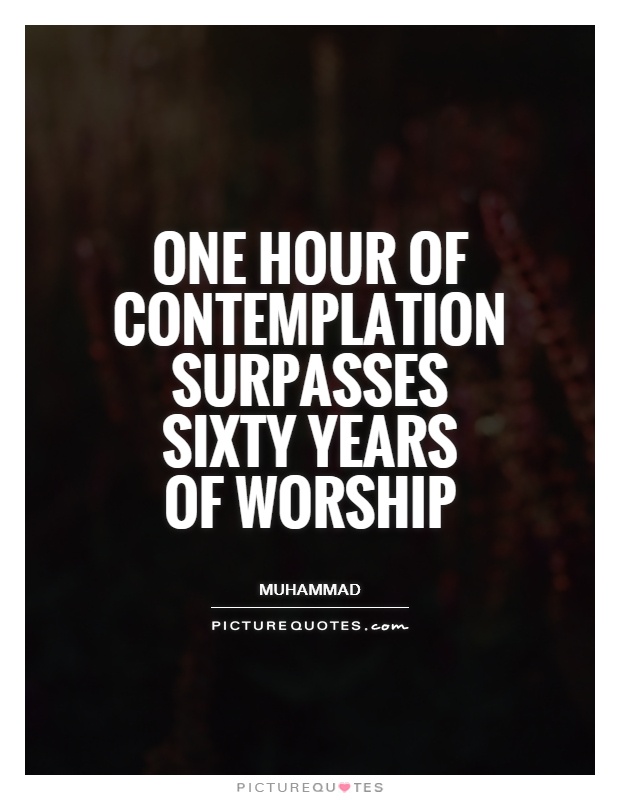
The word Tafakkur is from wazn (Saraf) that entails an action that requires a certain amount of exertion. Which is different from merely day dreaming.
That is why we tried to translate it into Active Contemplation. It’s a mujahadah (struggle) some sort in thought or thinking.
It requires an element of cleansing the mind from erroneous thought that is not conducive and in active engaging in a particular train of thought. And this Active Contemplation has an impact in ones mind, heart and soul.
From one level we can say that we are always in some kind of contemplation, but in this regard its about catching that thought and being aware of it.
Its interesting that in different religion there is the concept of what we called Meditation but with some differences.
But what is the difference in that Islam is that it engages on this stream which leads towards something, it’s not kept open ended.
Also, this is a practice, a tradition that is inherited from the Prophet Saw, it’s not a kind of solo attempt or Diy approach to see what you find within yourself.
They say its important for one to reflect in abundance, to bring a conscious upon their connection back to Allah. To bring about thinking about this Reality within our minds and heart.
Imam Alhaddad said the Prophetic Reflections (Tafakkur) are on 3 primary types/modes; These are things that you can activate, cultivate and grow in you.
1) Upon the wonders of Divine Power. And the marvels of the heavenly and earthly kingdoms. Eg. The trees, birds, skies, universe are their own kingdoms. With their own language, praise and purpose in existence.
2) On the Gifts, Grace and Blessings of Allah. “Were one to enumerate the Blessing (singular form) of Allah, you will never be able to encompass it”
3) Upon this Dunia (the ephemeral world) and the Hereafter. The Dunia with its challenges, harsh nature eg. If we really understood or know more about what Jannah and Jahannam really is, we will be more motivated.
Altho its good to have an allocated time for this but we don’t want to overburden ourselves with all the others practices like muraqabah, intentions.
Do that which you can maintain at the level of by which if you’re on travels or you might fall sick you’ll still be able to maintain that practice. That’s the bare minimum.
Even if its 1 minute! Any practice started is like planting a seed and the consistency is like this drop of water, everyday. Allah Yubarik. Allah will place His barakah into it and if Allah sees you at His door everyday come rain or shine. He WILL open up. That’s why you don’t give up hope.
You can’t throw this struggle away. Where else do you wanna go? We are going to die, the journey will always be going back to Him. You just gotta keep going, and keep up.
We’ll fall, we’ll delay, but this is this best place to be. We have to understand what Allah Swt is calling us to.
Another thing also, the nature of Reflection shouldn’t be constrained in a particular time. Its like saying (that allocate time) is you’re doing this regular cardio in the gym but so at times you still need to sprint for the bus.
So the technical allocated time to focus is maybe at the end of the day. But however Reflection generally is open at any time.
One practical thing is in our time is when we are going to a place, there’s a lot of time in between that. And we’re often thinking about things during the time making it to somewhere.
Another thing that helps to get into that reflective mode is to listen to something, the Quran, beautiful Qasidah, something that kick starts this mode. Because nowadays we are so against friction, we are not in the society where we listen to the Azan and it moves you back into that reflection.
In Tarim, everyday after Isyrak, asar, zohor, they have a Calling (nida’) from the same speakers that play the azan, they have this haunting chant, they say the Shahadah and then they recite the persons name, and inform that they have passed away and their place where you can visit to pay the condolence, and you hear it everytime. You can’t escape death. The constant reminder.
Now to apply this 3 channels of contemplation:
So there are 2 kind of approaches to tafakkur, obviously this is a whole discipline in the journey to Allah. It gets deeper and it has different levels, which the masters of this science has codified and articulate.
Just an entry point to this, is we have to be aware that this is something we need to engage. To think about how to think. Thinking about what we don’t need to think about. Adjusting and reorienting ourselves.
The 2 things go together are, Fikr and Zikr. The more active one does the remembrance of Allah, Zikr, the more purer one’s Fikr become.
Zikr is like fuel for one’s Fikir. It illuminates the place where you Fikir is received, is like your satellite. The more Zikr is done, the more your contemplation (Fikr) becomes luminous, deeper and profound. It expands your consciousness and those streams become clearer.
And Allah knows best.
بسم الله الرحمن الرحيم
الحمد لله رب العالمين
والصلاة والسلام على رسول الله
Allah said in the Quran “ I have not created Jinn and Mankind (Ins) except to Worship me.”
(Jinn = An unseen creation to ourselves of which the base component is a Smokeless Fire)
(Ins (Insan) = The Human Being, which has the capacity to remember, to forget (Nisyan), and also the capacity to feel estrangement and love (Uns). Our base component is Clay. But we are also part Light.)
How does it make you feel?
wa billahi Taufiq~
and Allah knows best.

بسم الله الرحمن الرحيم
الحمد لله رب العالمين
والصلاة والسلام على رسول الله
Zikir is the Rukun of the Path
– A Rukun is a pillar, a part of the foundation. If the pillar is remove the whole building collapses.
– One has to have 1) Consistency 2)Sacred Courtesy/Adab 3)Presence of Heart/’Hudur’.
– When a person approaches this practice sincerely with the 3 things mentioned, the minimum that one will experience is the sweetness that if one were to compare any sweetness of the dunia, it will be considered pathetically insignificant to that.
– The highest pinnacle of the practice (Zikir) is that one goes into a state of Fana (annihilation of Self) with the One youre remembering. Level of consciousness is so high and absorbed with the One, one could say its like drowning.
– Sheikh Abu Bakr Salim in his book when he was 17 yrs old said “ The heart is like a mirror and when its polished and refined it will start to reflect. But when its dirty and soiled it becomes blind (rusty). And a vessel if its empty and clean, when you place something in, it preserves and protects it. But if its full and dirty, its not going to preserve anything. Now this is the nature of the state of the Heart, if it becomes filled to the love and attachment of the Dunia (anything tt distracts you from Allah) it will bring you away from the Eternal Home. “
– “Go away from anything that distracts you in this dunia and the people of this dunia”
– Allah is Ever Present. Theres nothing like Him.
– One of the way to purify the Heart is thru Zikr, when its in this process one will start to see glimmering instances of Him and start to intuit that everything is from Him.
– The heart is so Important. Its where the Khilafa is placed. Its the place that holds the reality of Maarifa.
– Imam Alhaddad said about the Adab of Zikir;
– 1) To be in a state of Wudu’
– 2) To face the Qibla with your limbs still
– 3) To lower your head. (All of this is not really prescriptive but to brings oneself in presence of the heart. The people of Allah have specific clothes and special perfume just for Allah when they are alone with Him at night. And it has a huge effect on the heart, it brings about a deeper sincerity and intimacy with Allah.)
– 4) Bring the heart onto a presence of the One youre remembering.
– The one that does with all the 3 sets and the 4 subsets within Adab will see a Clear effect in ones life. And if a person is consistent in this state, the illuminating Light will start to radiate in the Heart and the secrets of the Unseen will start to be expose to him.
– What should be the one that is engaging in Zikr feel and bring to heart?
– 1) You should be preoccupied with the meaning. Absorb yourself in contemplating the meaning. This is the 1st point of entry. Not halfway in the meaning and halfway thinking of food etc. Its hard and its going to take a long time to realise those distractions and to detox & condition the mind. But its all about effort.
– 2) They should bring to heart that we are sat in the presence of the One that has Perfect Awareness of the innermost thought and whisperings of the Soul.
– 3) Then one should run the meaning of the Zikr onto the heart over and over whilst uttering with the tongue. So your heart becomes full with the meanings of Tauhid when you say La Illahillah.. it will get more elated and deep.
– La IllahaillaAllah “Theres nothing i aim for other than Allah” “theres nothing that can exist besides Allah created it” “ theres nothing that is witnessed besides Allah that is in it” etc.
– Alhamdulillah; to bring all the blessings you have and had in your life to heart. Especially in our times when there is SO MUCH TO BE THANKFUL FOR.
– Allahuakbar; to bring to heart awe and reverence. To think of something, He, as pure and unique.
– Selawat: to bring to heart like youre there present in his Noble Raudhah. Now in english its called Imagine but imagine has a connotation of make belief. But the Arabic term used for the translation of ‘Imagine’ is to be literally in that place. Its the connection of the heart. So youre actually drawing that spiritual nourishment from that place when you summon it to heart.
– So what is Zikr, what is this that we need to have adab with?
– Zikr we cld say is like meditation. But on the semantic level, the Prophetic Meditation cld be describe as; Having the Mind directed and focone particular Reality, Thing or Concept.
– The Prophet Saw was always in this deep state of Self Awareness and Being Witnessed ( Muraqabah and Musyahadah) not on the limbs and mind but in the Heart as well. ( own reflection; his order of being to able cultivated this, is through his sunnahs eg. not being fully satiated, optimistic, always giving thanks and rights to other people)
– There are many forms of Zikr, the best form of it is La Illa Ha IllaAllah.
– Zikr is one of the greatest form of worship. When one can’t do the nawafils during asar-maghrib eg. One can fill it up with Zikr.
– Imam Alhaddad said about the fruits and benefits, he said that this is not just about having the heart in that state of peace and tranquility but Zikir furthermore unlocks and pin point certain part of the heart so to polish them and turn them to receive the Divine Grace and Nourishment.
– When one is really constant in this state it’s a sign of the lights of Wilayah (Sainthood) being shone onto the person because a sign that Allah is starting to Love that person is He busies the Servant’s tongue with His Remembrance and With the people of Zikr.
– The general public takes the Madad (spiritual nourishment) from the People of Zikr.
– So how do we cultivate Presence?
– The Shuyukh said there are places and time to be especially present. And there are 4 times of the day if you pay respect to it Allah will put Barakah in your day and in your entire Life;
– 1) Just before Fajr. ( even if you cant be bothered to wake up and pray 2 rakaat, at least recite La Illahi Ha Illaha illaAllah MuhammadaRasulullah) ( or just doa informally if you really cant get up, doa to give the strength to leave sins and do good etc)
– 2) between Fajr to Ishraq.
– 3) just before Maghrib.
– 4) between Maghrib and Isyak. (Traditionally they will engage with the Quran)
– The best way to practice this art of Zikr is to have a schedule around the Prayer.
– One of the best is to Selawat and do 10 in the morning and 10 evening.
– We need to remember the purpose of our existence is to ‘worship Him’ which is understood by as ‘to know Him’. To reach this true potential and live up to being the Khilafah of this Dunia. And not just to attached ourselves to this lowly Dunia that Allah have created as a test.
– One of the best is recite لا إله إلله الملك الحق المبين. ( given to Fatimah Ra) 100 x before or after Zuhr.
– One of the best also is Tasbih, Tahmid, Takbir x33 just before we go to sleep.
– When you do anything that is Mubah, do add in some aspects of Zikr in that period. Because you’re still in the Vessel of Time throughout this life and the Mubah/Neutral period takes up a lot of that life.. you need to have Adab with Time, especially anything that is precious. So if you keep in mind of this adab you will see great openings and barakah in the things you do in the life.
– But also its very good to have an intensive form of Zikr especially in the middle of the night or any specific time you can allocate to just meditate and let the meaning run over your heart and mind.
– We can only be doing Zikr, thru the Izin of Allah. Allah will only honour the one that deserves to say such profounds on their tongues. Its a gift and blessings again for us to be in Zikr.
– The reality and essence of Zikr is to be with the One youre Remembering.
– How many a times do we say this Epic phrases in the Prayer like Subhanallahil Azhim wa bihamdih. Like Praise be to Allah the Vast and Magnificent! and the heart is elsewhere. The prayer is one of the highest form of Zikr/Meditation at one level, because your whole limbs are still.
– If we understand that Meditation(i.e Solat & Zikr) is an engagement of Allah, a focus on Allah, a devotion to Allah and ultimately a DETOX FROM ALL ELSE, now this is actual one of the most intense form of that practice. (to remove all else in the mind and soul for other than Allah)
– Someones ask how do we be present in the prayer or meditation?
Ans; Now the nature of Heart is it cannot just flip. Like if initially one state is in such a heedlessness and then suddenly start doing the Takbir (for prayer) and wonder why we dont experience all these amazing things?
– We need to warm up and cool down the heart just a bit before and after, and its tiring. It requires exertion. Even if its just reading ayatul kursi before the prayer so we can get the heart in line and out of the heedless state
– The Solat is the Gift of the Prophet personally from Allah. It wasnt thru Jibril. The tassyahud was a communion with Allah when the Prophet went passed the Lote Tree. It was a special meeting that no other creation has ever done and it was to give the Prophet Saw this gift for the Ummah. And know the doa and of sentence ‘Assalamualaina wa ala’ ibadillahis-soliheen’ is him saw not forgetting his Ummah in such an intimate and special meeting. Its from his love and mercy to his ummah. Saw..
– Now when a believer is more righteous and devoted in the straight path they are more affected by this doa of peace upon the righteous servant that is unlock by the prophet saw and receiving this peace from Allah swt. If that is not intense and not making you focus then what is.. This is the whole point of life.
wa billahi Taufiq~
and Allah knows best.
بسم الله الرحمن الرحيم
الحمد لله رب العالمين
والصلاة والسلام على رسول الله
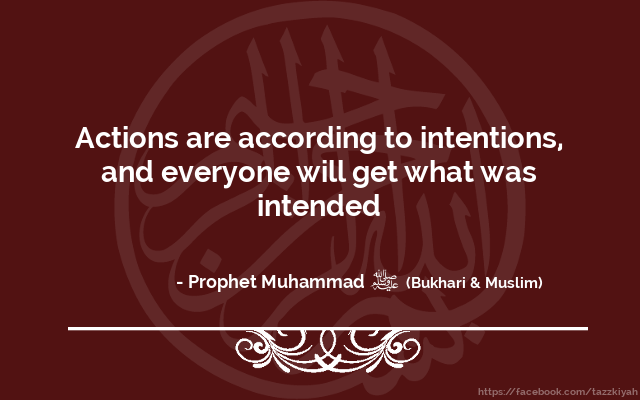
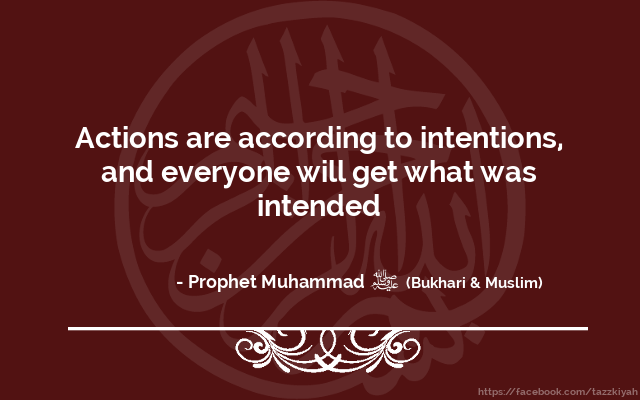
If it seems boring say even after 3 months, the intentions that youre going to work is still the same – so I can provide for my famiy – at least what it does is keeps you from being diverted from the path and still rooted to good intentions.
Part of keeping your intentions firm is that the roots will start to go deeper and deeper and you start to take in ‘nutrients’ from place you didn’t know existed. This is a sign of growth and movement up towards Allah Swt,
Some of this there are no words to explain, so we ask Allah to keep us rooted to what is real.
This post and the upcoming ones will be a series of transcribe notes from a course based on the book of the great scholar from Yemen, Imam Al Haddad – The Book of Assistance. Its led by a scholar Shaykh Musa’b Penfound in Sweden.
Shaykh Musa’b Penfound was born and raised in Manchester, England. After a two year journey, he entered Islam at the age of eighteen. He has a Degree in Arabic Language & History from the University of Manchester. Since 2005, after an interim period at the University of Manchester attaining a degree in Arabic Language & History, he has been studying full-time under authentic scholarship, with unbroken chains of transmission back to the Prophet Muhammad peace be upon him.
His formal training and knowledge was derived through a classical syllabus based upon the formal Islamic sciences combined with the disciplines of inward purification. He has received scholastic permission and licences (ijazah) from leading traditional scholars, providing authentic credentials that ensure a trustworthy and credible source for accurate teaching and demonstration of the faith.
His main teacher is the distinguished Islamic scholar; Al-Habib Umar bin Muhammad bin Hafidh under which Shaykh Musa’b has received guidance and tutelage.
He has also studied under scholars in the renowned seminary of Dar-Al Mustafa in Tarim, Yemen which include the Grand Mufti of Tarim, Habib Ali Mashour bin Hafidh, Shaykh Umar Al-Khatib, Al-Habib Muhammad bin Abdullah Al-Idrus, Al-Habib Musa Khadhim As-Seggaf among others.
He has received training and ijazah to teach the following Islamic sciences:
He travels regularly and has taught and lectured in the UK, the Middle East, South Africa, Comoros Islands, Indonesia, Malaysia and Thailand. Shaykh Musab currently lives in Hadramout, Yemen where he continues to learn and teach.
بسم الله الرحمن الرحيم
الحمد لله رب العالمين
والصلاة والسلام على رسول الله

Disclaimer: These are my own very short summary and understanding from each advice given by Imam Ghazali. In no way it is capturing the full meaning of its message. Apologies in advance for my shortcomings and injustices. I hope these excerpts will instill the desire to read this short treaty (i can borrow mine if you want), the insights and wisdom will amazed you. It nourishes & reignites the soul.
بسم الله الرحمن الرحيم
والصلاة والسلام على رسول الله
Al-Ghazali’s letter in response, Ayyuhal Walad (Dear Beloved Son), distinguished in both its eloquence and remarkable brevity, constitutes a comprehensive series of advices to his beloved student. Covering all elements of life, from seeking material wealth to discovering the realities of the self, it summarizes the essential elements necessary to go about curing the heart and improving its condition in this world and the next. There are a total of 23 advises:
And Allah knows best.
بسم الله الرحمن الرحيم
والصلاة والسلام على رسول الله
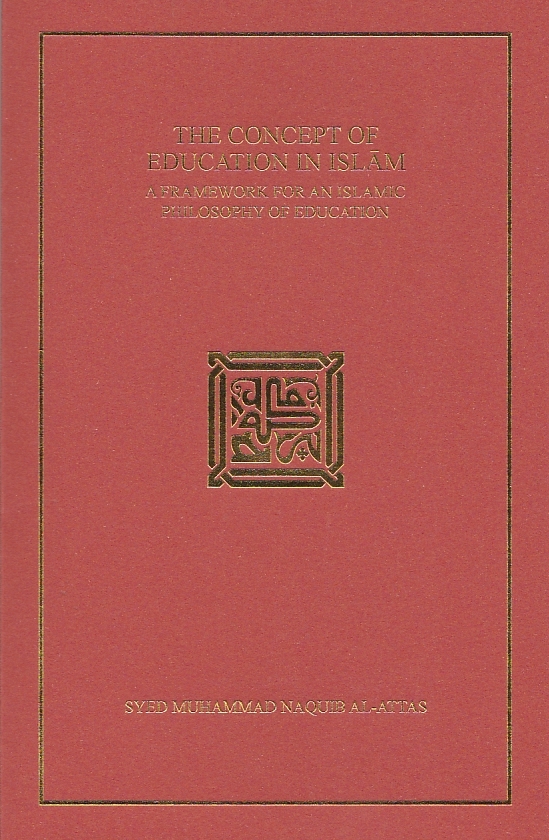
Intention of the book:
– Intention of the book is to define education as viewed by Islam and to inform the crisis present in our education system.
– It is a book of definitions relating to the essential elements in the concept of education and its processes as viewed by Islam
The Scientific Nature of the Arabic Language:
– The nature of the Arabic Language is that its semantic structure is established & constant throughout history because of the root words system.
– They have certain basic semantic fields that convey concepts and ideas from a Quranic view
– It was because of this scientific nature & precision that the science of Tafsir actualized.
– The Difference in Tafsir and Ta’wil is the former is derived from the scientific way on deciphering meaning from the language. And Ta’wil is an intensive form to interpret meanings from the ambiguous sentence.
The Semantic Field in the Context of Islam: (7-12)
– A semantic field is a conceptual structure described from a central word or term.
– A semantic field usually overlaps other concept structures as projected in the Islamic vocabulary and governed by Quran world-view.
– All the languages of Muslim peoples have already been infused with this basic Vocabulary. The infusion occurred historically with the spread of Islam.
– This phenomenon is called islamizations of language. This entails a shift in the mind and vision of the reality and truth of that word/term.
– The Arabic language also came into Islamisation during the Advent of the Quran. Although the words used were familiar to the Jahilias, the semantic fields were totally different. (eg. Karam)
– In order that the conceptual structures and network becomes an established principle in governing authentic meaning and usage as well as projecting the Islamic world view, each language of the non-Arabic Muslims have been infused by the Islamic basic vocabulary. (Islamic Language)
– The Modernist movement has caused much undermining of past scholarship on its spiritual and intellectual leadership and causes much confusion.
– In the past Muslim thinkers had grapple with foreign concepts and find suitable Arabic words and terms to symbolize them in the conceptual system and withstood the test.
– The reality of the problem now is not a matter of language but a matter of worldview.
– Semantic confusion as a result of misapplication of key concept in the Islamic vocab can change our perception of the Islamic world view.
The concept of education in Islam:
– Education is something progressively instilled in man.
– 3 elements that constitutes Education: 1) The content 2) The Process 3) The Recipient
– The Recipient is the Man. The Aql(Mind). This is a spiritual substance that is within. Not the Body and Animal aspect.
– The Content is the Something. The Something is the knowledge of the Purpose of seeking it.
– The Purpose and Content of education is the recognition & acknowledgement of the proper places of things in order of creation, such that it leads to the recognition and acknowledgement of the proper place of God in the order of being & existence.
– Acknowledgement is to make himself suitable to the requirements of the right and proper place of things & affairs. The requirements entail actions, termed Amal, in accordance to what is recognized, Ilm as the requirements.
– Recognition means discovering the proper place in relation to what is recognised; and Acknowledgement means concomitant action (amal) resulting from discovering the above information. Knowledge/Ilm is (Recognition) and then Amal (Acknowledgment).
– Proper place has 2 domains: 1) man and the empirical world 2) religious and ethical aspects of human existence.
– ‘Proper’ place means the Haqq. The reality to the 2 domains. The Reality that is conformed involves statements/words/propositions/beliefs based on revelations etc.
– Haqq (Truth): suitableness to the requirements of the proper places of things as recognised by true judgement
– Acknowledgement becomes the fundamental element in the true ‘Recognition’ on the concept of Education which means; ‘realisation’ & ‘actualization’ in oneself of what is required. This is term as Tahqiq. Which is from the word Haqq.
– Acknowledgement of what is recognised renders an education. Otherwise Recognition alone is but a ‘learning’ (Ta’allum) تعلّم.
– Wisdom: God-given knowledge which enables the recipient to discover the right and proper place for a thing to be.
– The condition of being in the proper place is what we have called Justice.
– Adab is a method of knowing by which we actualize the condition/requirements of being in the proper place.
– Adab is the discipline of body, mind and soul. Adab is the manifestation of Justice(adl’) as it is reflected by Wisdom. Wisdom->Adab->Justice.
– Adab itself is the knowledge of the purpose of seeking knowledge. (When you learn/get adab from wisdom you learn what is the purpose of seeking knowledge?) (pg 23)
– The purpose of seeking knowledge in Islam is to inculcate goodness in man as man and individual self. Good is the man of adab which is the spiritual and material life of man.
– Adab involves action to discipline the mind and soul. The acquisition of good qualities and attributes of mind and soul, perform correct against erroneous action, proper against wrong and preserving from disgrace. This constitutes the actualisation of the purpose of knowledge.
– Adab is recognition and acknowledgement of the reality of that knowledge and being are ordered hierarchically according to their various grades and degrees of ranks and of one’s proper place in relation to that reality and to one’s physical, intellectual & spiritual capacities and potentials.
– Tarbiyah means to feed, to nourish, to nurture. And its not limited to the man alone. Whilst the Education process in essence is set towards the aql’ which is only in Man, as defined from the islamic concept.
– Since the Tarbiyah is being passed on by the parents to the State/education system, there is a danger that ‘education’ becomes a secular exercise of material and physical concerns which will only refine the social and political life.
– God who creates, nourishes, sustains, provides, cherishes and possess such acts is by which He is al Rabb. When by analogy a man similarly when bringing up his offspring is called Tarbiyah.
– Tarbiyah simple means cherishing which are acts of Rahmah and that is divinely attributed to Al Rabb. Meaning: bringing a thing to a state of completion by degrees.
– Knowledge is distinct from Mercy/Rahmah. Hence Tarbiyah cannot be called education per se.
– Ta’dib includes; Knowledge (ilm) – Instruction ( ta’lim) – Good breeding (tarbiyah).
The problem & its solution:
– The problem is the confusion and error in knowledge (by the Islamic definition and its vision of reality and truth)
– It creates the condition for: Loss of adab within the community.
– Loss of adab means the loss of the capacity for discernment of the right and proper places of things, resulting in the levelling of all things, the confusion of the order of nature as arranged according to their maratib and darjat, the inability to recognise and acknowledge right leadership in all spheres of life.
– Example; the loss of the proper place of things in environment. Environmental degradation, where we throw our bottle anywhere beside the bin its shows that we dont have adab as to the proper place of the ocean and the world.
– The proper place of Education system in regards to Knowledge and teachers is also out of place. Education systems becomes a business where Knowledge now becomes a commodity and Teacher being service providers of that. Knowledge and Teachers are supposed to be sacred and highly respected.
– The solution is in an education process of Ta’dib.
– Why wasnt adab infused in the education system earlier if it was that crucial? Answer: it was already infused in the beginning of islamic scholarship based on exemplifying the Sunnah and began to translate itself into the islamic conceptual framework both in theory and practice. But due to specific causes resulting from the confusion and error in knowledge and its islamic vision and reality the meaning of adab/ta’dib underwent a restriction in the meanings which affected its role as a basic concept of education.
– Its due to the ignorance and error from the majority of men that have no knowledge of the purpose of life causes the change in the semantics of major key concepts that causes the degrading social change.
– The influence from dictionaries and the newspaper have upon the thinking of the masses on the language and technical terms and propagation of alien concepts are truly grave.
The form of the system of education in islam:
– The concept of education in Islam pertains to man alone, its formulation as a system describes the model of man as perfect in the sacred person of the Holy Prophet.
– So the Islamic University must reflect the Holy Prophet in terms of knowledge and right action and to produce people resembling him, people of Adab.
– The Man, Knowledge and University consist of 2 parts. Man; 1)His soul and inner being 2)His Physical faculties & senses. Knowledge; 1) God-given 2)Acquired. University; 1)Fardhu Ain 2) Kifayah.
– The connecting link for the Spiritual & Physical knowledge is the Aql. The Aql will understand realities and truth from the two sources of knowledge.
– Knowledge is fluid and thus increases in its scope and content as one increase in maturity and responsibility. Fardhu ain is then taught from the primary to the university level.
– But the Scope and content on University level must first be formulated before they can go to the lesser gradations.
– The islamization of knowledge means the deliverance of knowledge from its interpretations based on secular ideology; and from meanings and expressions of the secular.
– At the end the author is proposing ideas/theories on creating a new University that is untouched by the secular ideologies. And what does our secular education system now does to the mind of muslims and islam as a whole.
Post Reading Notes/Ideas: (shared by other readers)
Problems and Solution
Answer: It refers to things other than knowledge masquerading as knowledge. We can see this issue in imam ghazalis book in his Ihya. So when we talk about Ilm (knowledge) we have to recognise where is the Source. It’s from Allah. There are 2 great books that we must refer from this Source. The Book of Allah (Al Quran&Sunnah) And the Book of Nature (which is meant to direct our mind and soul to the Author)
Form of education
Opinions shared by readers on how a secular state can be approach by Islamisation of Knowledge:
– One opinion is saying that the adab of ilm and amal is also to translate and distilled all this high level ideas and discussion to the lower tier like babies and teens etc. To the response and add on is saying about the adab to scholars. The proper place for the scholar is to enlighten others and not to translated and distills the knowledge.
– Rahmah in the sense of knowledge is that everyone’s proper place in this knowledge is to contribute to the civilization.
– A reader shared an amazing excerpts that is to address the community thru the weekend madrasahs and to unify the ‘2 worlds’ Eg. The importance of understanding that the fardhu ain subjects are actually for a bigger picture in contributing to the community to supplement and direct the knowledge we receive from the secular education to a bigger purpose of life. The Weekend Madrasahs should be a means of instill the proper place of Allah and the Prophet in their academic Educations and empower that knowledge for a greater good thru the Islamic Lens. We should stop the dichotomy of the 2 source of education as 2 different worlds. Where muslims will feel that the secular education its only purpose is to earn a living and doesnt contribute and enhance or support our ascension to the God. What happens is the students will have a very reduced idea on how to contribute to civilsation. So the notion of addressing the idea of the perfect university is a bit of a waste of time esp in a secular state. Rather we shld address the bottom up and accept that we are living in a very secular system.
– Another reader gave an idea/opinion is through the middle up and middle down approach. Meaning the bulk of the citizen should use the power of the masses to influence change by themselves by education the grassroot and the top tier by making change in the education system. But Prof attas is the up to bottom, the perfect University then to the grassroot. But the debate was how long did the changes took in the past and should we hasten process of change or should we trust the passage of time
Take away Questions:
And Allah knows best.
بسم الله الرحمن الرحيم
والصلاة والسلام على رسول الله
7th Duty: Loyalty and Sincerity
8th duty: Relief from discomfort & inconvenience.
Such then are the duties of fellowship. We have described them now in general, now in detail. But the matter it not complete unless they are taken to lie upon yourself and in your brothers favour. Therefore you must bind all your faculties to their service.
بسم الله الرحمن الرحيم
والصلاة والسلام على رسول الله
4th Duty: To use the tongue for speaking out
5th Duty: Forgiveness of mistakes & failings
6th Duty: Pray for you brother during his life and death so he may have all he wish for himself, his family and his dependants.

 Seedlings